
PRP for Back Pain
in NYC
Expert PRP Therapy for Back Pain by Dr. Sonali Lal, M.D.
Advanced regenerative treatment for chronic spine pain. Target degenerative discs, facet joints, and sacroiliac instability without invasive surgery in Manhattan.
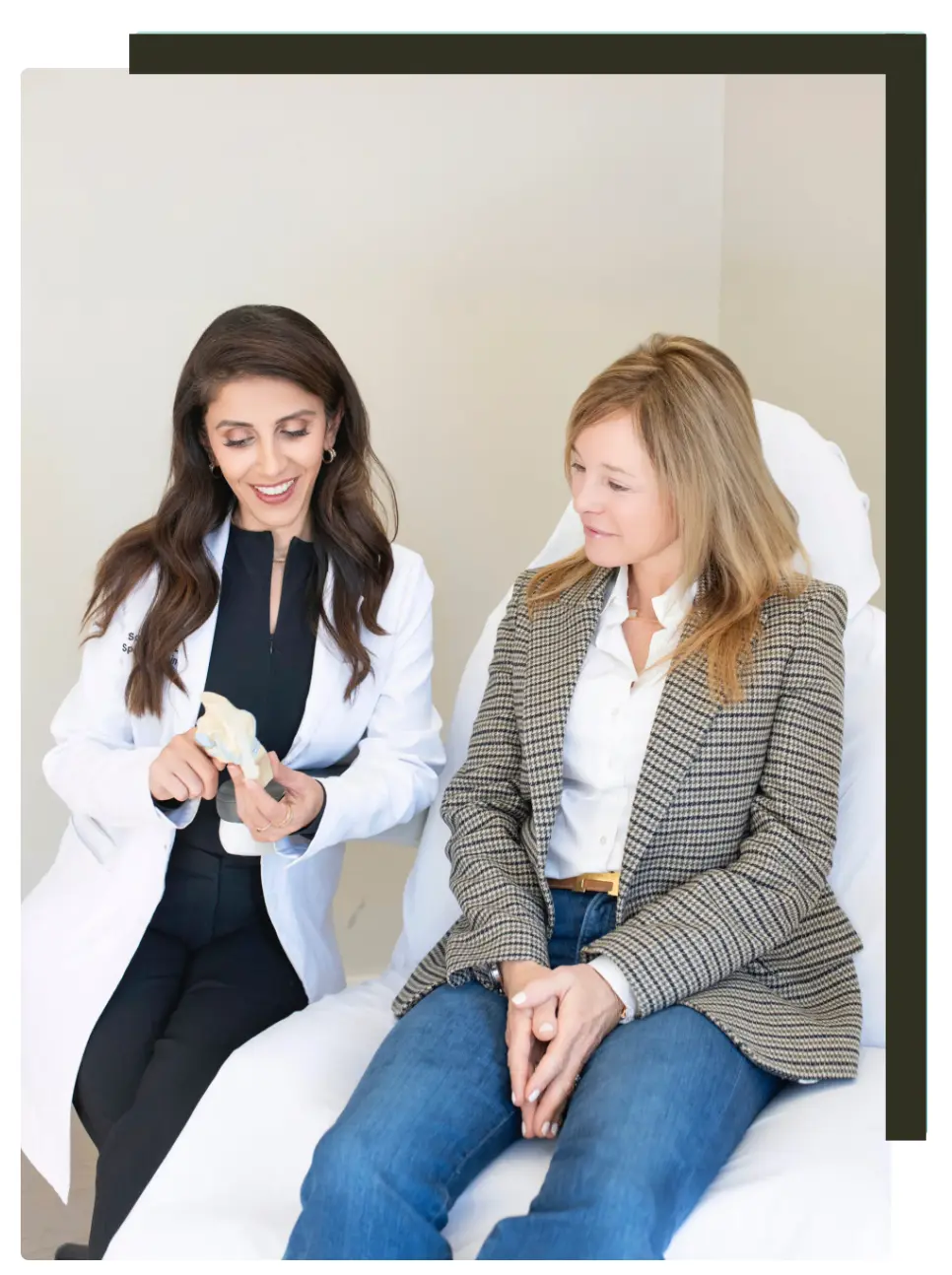
Advanced Non-Surgical Solutions for Chronic Spine Pain
I am Dr. Sonali Lal, a board-certified physiatrist with more than 20 years of experience in musculoskeletal medicine, interventional spine care, regenerative orthopedics, and image-guided procedures. As an Attending Physician at NewYork–Presbyterian Hospital and Assistant Clinical Professor at Columbia University, I specialize in helping patients find advanced non-surgical solutions for chronic back pain and complex spine conditions.
If you have been searching for "PRP for back pain near me", you are likely looking for an alternative to pain medications, repeated steroid injections, or spine surgery. Many patients who come to my Manhattan practice want to understand whether regenerative medicine can help address the underlying source of their symptoms while supporting long-term function and mobility.
Back pain is one of the most common reasons people seek medical care. Whether symptoms developed after an injury, years of physical activity, repetitive strain, or age-related degeneration, chronic back pain can affect every aspect of daily life. Walking through New York City, commuting to work, exercising, sitting for long periods, carrying groceries, or simply getting a restful night's sleep can become increasingly difficult.
Platelet-Rich Plasma (PRP) therapy has emerged as one of the most widely studied regenerative orthopedic treatments. By utilizing concentrated healing components from your own blood, PRP therapy may support the body's natural repair processes and provide a non-surgical treatment option for carefully selected patients.
As a physician specializing in regenerative orthopedics and interventional spine medicine, I carefully evaluate every patient to determine whether PRP therapy is appropriate based on their diagnosis, imaging findings, symptoms, and functional goals. — Dr. Sonali Lal, M.D.
Understanding the True Cause of Back Pain
One of the most important things I explain to patients is that back pain is a symptom, not a diagnosis. Many different structures within the spine can generate pain. The spine is a highly complex system supported by numerous tissues, including:
Patients often assume their MRI findings automatically explain their symptoms. However, imaging findings and pain levels do not always correlate. Successful treatment begins with identifying the specific structure responsible for pain. My approach focuses on accurate diagnosis because successful regenerative treatment depends on understanding exactly what structure is causing symptoms. — Dr. Sonali Lal, M.D.
The Precision Protocol
Unlike treatments designed solely to suppress inflammation temporarily, PRP focuses on enhancing biologic activity within injured tissues. Delivering targeted growth factors directly to the damaged structural zones of your spine.
Blood Collection
A small sample of blood is collected from your arm. This process is straightforward, sterile, and similar to a routine clinical lab draw.
Specialized Processing
The blood sample is processed in a centrifuge to separate and concentrate platelets containing essential healing components like growth factors and cellular signaling molecules.
Image-Guided Injection
The concentrated platelet-rich plasma is precisely delivered into the targeted area using advanced image-guided techniques to ensure absolute anatomical placement accuracy.
Conditions Evaluated for PRP Therapy in the Spine
PRP is not appropriate for every patient or every spine condition. Careful patient selection is essential. Every patient requires a comprehensive assessment before treatment recommendations are made.
Degenerative Disc Disease
Age-related changes in spinal discs can compromise stability, chemically irritate adjacent tissues, and contribute to chronic lower back pain and stiffness.
Facet Joint Dysfunction
The small, stabilizing joints along the back of the spine may become arthritic, inflamed, or painful over time, making standing or twisting highly uncomfortable.
Chronic Ligament Injuries
Spinal ligaments play a critical role in stability. When stretched, torn, or chronically injured, they fail to support the vertebrae properly, leading to persistent discomfort.
Sacroiliac (SI) Joint Dysfunction
The SI joints connect your pelvis to your spine and are a frequently overlooked source of lower back, buttock, and radiating pelvic pain.
Sports & Overuse Injuries
Athletes and active individuals often develop chronic spine-related pain due to repetitive stress, mechanical overload, or micro-trauma from physical activity.
Evaluated Spine Conditions
- • Chronic Ligament Injuries contributing to instability
- • Facet Joint Pain and localized spine stiffness
- • Sacroiliac (SI) Joint Dysfunction and pelvic pain
- • Disc-Related Pain and Degenerative Disc Disease
- • Sports-Related Spine Injuries and athletic overuse
- • Chronic Mechanical Back Pain slow to heal on its own
Why Image Guidance Matters During PRP Procedures
The effectiveness of PRP therapy depends on more than the PRP itself. Precision matters. The spine contains highly specialized structures positioned close together, making blind injections highly ineffective and unsafe.
When performing PRP procedures, I utilize advanced image-guided technology to visualize the facet joints, ligaments, sacroiliac joints, areas of degeneration, and precise sites of injury. Image guidance helps ensure accurate placement of the PRP directly into the target tissues. Patients are often surprised to learn how important procedural precision is to treatment planning. I utilize advanced image-guided techniques designed to maximize accuracy, safety, and individualized patient care during regenerative spine procedures. — Dr. Sonali Lal, M.D.
Avoid Surgery & Stay Active
Patients throughout NYC often seek PRP because they want to maintain mobility, continue exercising, improve function, reduce pain during daily activities, and explore minimally invasive treatment options first. My role is helping patients understand all available treatment options and make informed decisions about their orthopedic care.
Addressing Surrounding Structures
Sometimes back pain is compounded by referred discomfort. By evaluating mechanics in adjacent areas, such as the hip, the knee, or the ankle/foot, we ensure our treatment path focuses directly on your primary pain generators.
Seeking PRP Before Considering Spine Surgery
Many patients who visit my practice are interested in exploring non-surgical options first. I frequently hear: "I want to avoid surgery if possible," "I want to stay active," "I am not ready for a major operation," and "I want to understand all my options." These concerns are highly understandable.
While surgery remains appropriate for certain conditions, many patients first want to explore conservative and regenerative approaches. I help patients make informed decisions by providing individualized recommendations based on their diagnosis, goals, and lifestyle. — Dr. Sonali Lal, M.D.
Our Comprehensive Approach
PRP therapy is only one component of a successful spine treatment strategy. When patients come to my practice seeking PRP for back pain, I focus on developing a comprehensive treatment plan designed to improve both symptoms and function. This strategy includes:
- • Targeted physical therapy & core strengthening
- • Mobility training and deep biomechanical correction
- • Postural correction and tailored workstation ergonomic modifications
- • Ongoing follow-up care combined with non-surgical procedures like trigger point injections, prolotherapy, platelet lysate therapy, or BMAC therapy

Dr. Sonali Lal, M.D.
Board-Certified Physiatrist | 20+ Years Experience
I am Dr. Sonali Lal, a board-certified physiatrist with more than 20 years of experience specializing in musculoskeletal medicine, interventional spine care, regenerative orthopedics, and image-guided procedures. As an Attending Physician at NewYork–Presbyterian Hospital and Assistant Clinical Professor at Columbia University, I focus on non-surgical orthopedic and spine care.
My practice offers a wide range of advanced non-surgical and regenerative procedures designed to help you avoid invasive operations, including PRP therapy, prolotherapy, platelet lysate therapy, and BMAC therapy. Whether you suffer from chronic lower back stress, spinal joint stiffness, or localized elbow pain, we prioritize finding the root pain generator through precise, patient-centered care.
"I believe patients deserve a thoughtful evaluation and a treatment plan tailored to their diagnosis, goals, and long-term function. I take pride in contributing the 'Intraosseous Injections' chapter in the Atlas of Interventional Orthopedics to support evidence-based medicine."
Expectations & Recovery
Every patient's recovery is unique. Some notice improvement within several days, while others notice progressive, gradual benefits over a few weeks as healing progresses and tissue remodeling takes place.
Procedural Expectations
• Highly controlled image-guided delivery
• Real-time anatomical precision
• Delivered directly into facet, ligament, or SI joint spaces
Rehabilitative Integration
• Core strengthening support
• Movement and postural correction retraining
• Ergonomic activity adjustments
Frequently Asked Questions
What is PRP therapy for back pain?
PRP therapy uses concentrated platelets from your own blood to support the body's natural healing environment within injured spinal tissues.
Can PRP help chronic back pain?
Some patients with chronic spine-related conditions seek evaluation for PRP therapy as part of a comprehensive non-surgical treatment plan.
Can PRP be used for ligament injuries?
Certain ligament-related spine conditions may be evaluated for regenerative treatment depending on the diagnosis and symptoms.
How do I know if I am a candidate for PRP?
A comprehensive evaluation including a physical examination, imaging review, and discussion of your goals is necessary to determine candidacy.
Is PRP surgery?
No. PRP therapy is a minimally invasive regenerative orthopedic procedure and is very different from surgical treatment.
Patient Success Stories
Verified Patient Recovery
Upper West Side Orthopedics
If you are searching for a back injection, chronic spinal care, or a PRP specialist near me in NYC or the 10023 area, I invite you to schedule a consultation. Let's identify the true source of your back pain and build a treatment plan centered around your long-term recovery.
240 West 73rd Street
New York, NY 10023
Call Office
(212) 404-1009